Slides and Guide
Each card below to a standalone slide and guide page aligned to a slide in the Data Product deck.

Data Product 101: Overview
Start here: the 'Why' and 'What' plus core frameworks.

From Resource to Product
The strategic shift and business case for treating data as a product.

The Data Product Mindset
Core principles and the paradigm shift from projects to products.

What is a Data Product?
Architecture: pillars, ports (interfaces), and deployable units.

Data Product Attributes
The six baseline characteristics that make data usable and trustworthy.

Software vs Data Products
How state, testing, lifecycle, and failure modes differ.

Balancing R&D and Validation
The builder’s dilemma: accuracy vs. time-to-market.
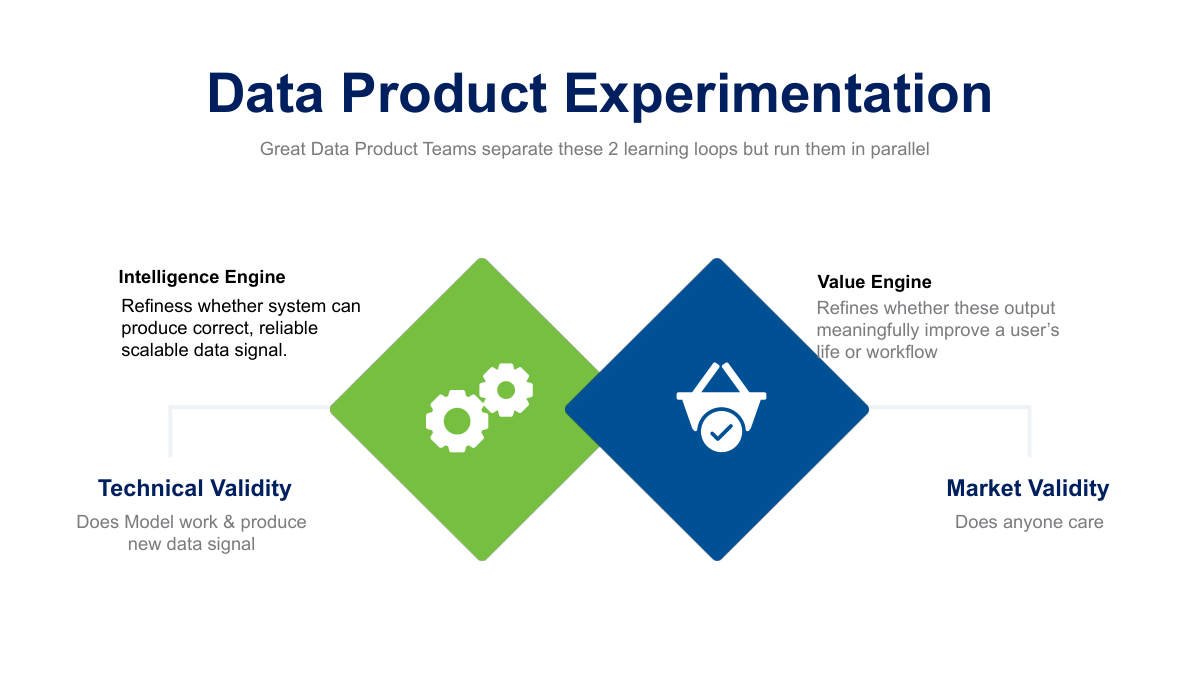
Data Product Experimentation
Dual engines: intelligence (technical) and value (market) validity.

The Drivetrain Approach
Objective → levers → data → models: build prescriptive products.

Data Product Operating Model
Centralized vs hub-and-spoke vs full data mesh.

Data Product Life Cycle
End to End Journey to Build and Govern

Build Data Products with Knobs
Levers to Control Data Product Output

3 Pillars of Data Products
Align User Task and Data

Value Chain of Data Products
Data Product to Cognitive Intelligence to Impactful Result

Data Product Usage
Data Product Capability Spectrum - 5 Ways to Use Data Products