Generative AI Tutorial – Slide 10
Explanation of the concept shown in Slide 10 with examples, applications, and technical insight.
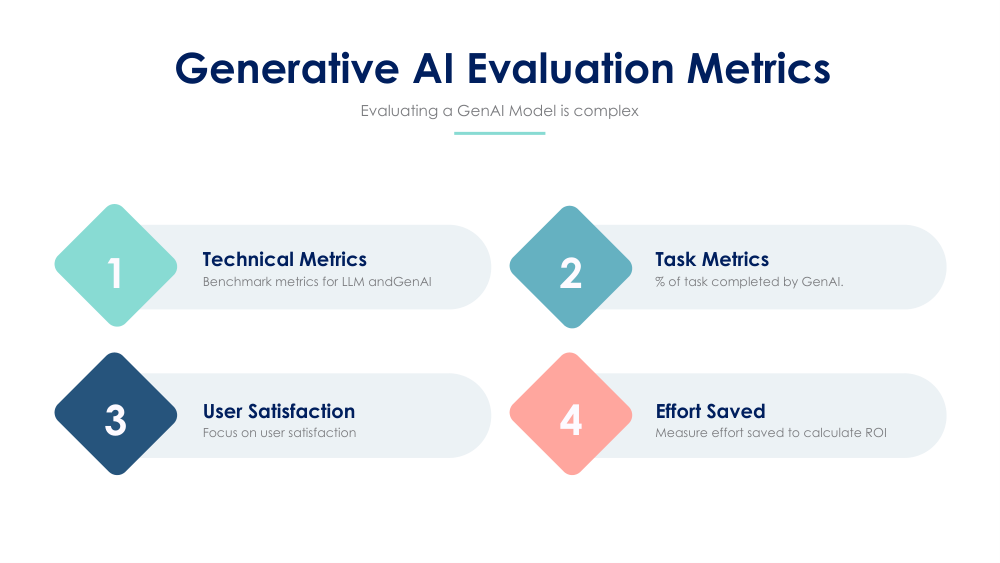
Explanation of the concept shown in Slide 10 with examples, applications, and technical insight.
Slide 10 focuses on the idea that generative AI models learn patterns and produce new data by simulating the underlying probability distribution of their training inputs. This slide emphasizes how these models iteratively refine predictions, generate outputs, and improve from feedback signals.
Generative models learn statistical patterns from massive datasets words, pixels, sound waves, or code.
Instead of memorizing, models estimate probability distributions to generate new but coherent samples.
Systems like transformers refine predictions step-by-step, improving accuracy through learned context.
Model receives examples (text, images, audio).
Neural networks detect structures and relationships.
The model selects likely outcomes token by token or pixel by pixel.
Model produces text, images, or other content.
Examples: chatbots, automated writing, summaries, code generation.
Examples: concept art, product prototypes, photo enhancements.
Examples: voice models, music generation, video scene generation.
It uses learned probability distributions to choose the most likely next token or pixel.
No. Sampling randomness introduces variation and creativity.
The model’s abilities and limitations come directly from the data it was trained on.
Explore more slides, tutorials, and hands-on examples.
View More Tutorials