Generative AI – Slide 8 Explained
Understanding how Generative AI transforms input prompts into meaningful, high-quality outputs.
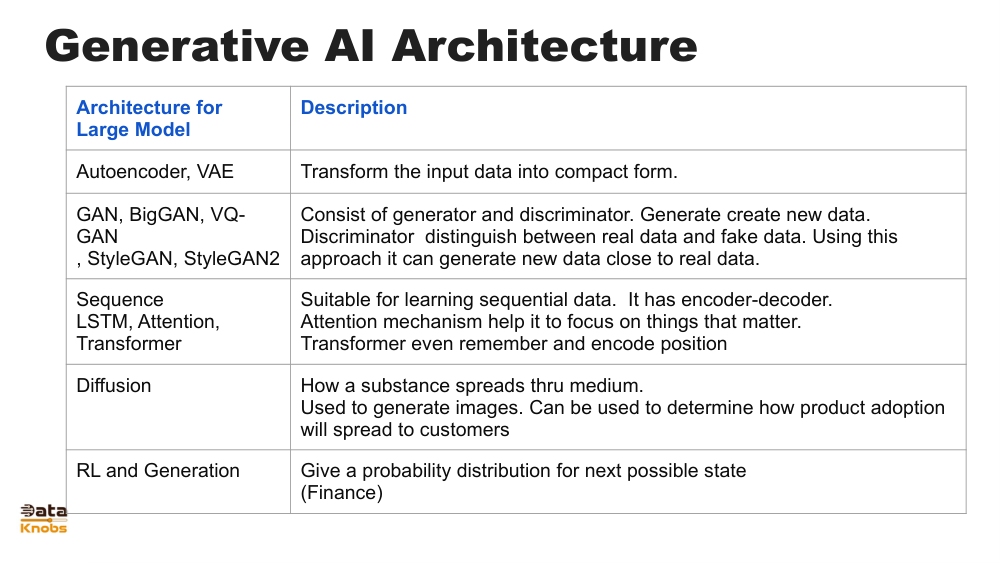
Understanding how Generative AI transforms input prompts into meaningful, high-quality outputs.
Slide 8 introduces the core idea of how Generative AI models take an input prompt, process it through learned patterns, and produce new content. This process is based on statistical modeling, probability prediction, and massive training on diverse datasets.
The user provides a text or image prompt which defines the task and expected output.
The AI processes the prompt using neural networks trained on massive datasets.
The system predicts the most likely next elements, forming coherent text, images, or other content.
Prompt Ingestion: The system tokenizes the prompt into numerical representations.
Neural Processing: Transformer layers analyze sequences, detect relationships, and apply attention mechanisms.
Prediction: The model computes the probability of each possible next token or pixel.
Completion: The output is constructed step-by-step until the final result is reached.
Articles, summaries, creative writing, chatbots.
Concept art, product design, illustrations.
AI-assisted programming, auto-complete, debugging.
Music composition, sound design, voice generation.
It adjusts internal parameters by training on large datasets using gradient descent and optimization algorithms.
It recognizes statistical patterns rather than human-like comprehension, but can mimic understanding convincingly.
They steer the model toward specific outputs, influencing structure, tone, and detail level.
Explore more slides, hands-on exercises, and examples.
Next Slide