Generative AI Tutorial – Slide 23
A clear explanation of the concept shown in Slide 23, including examples, applications, and technical details.
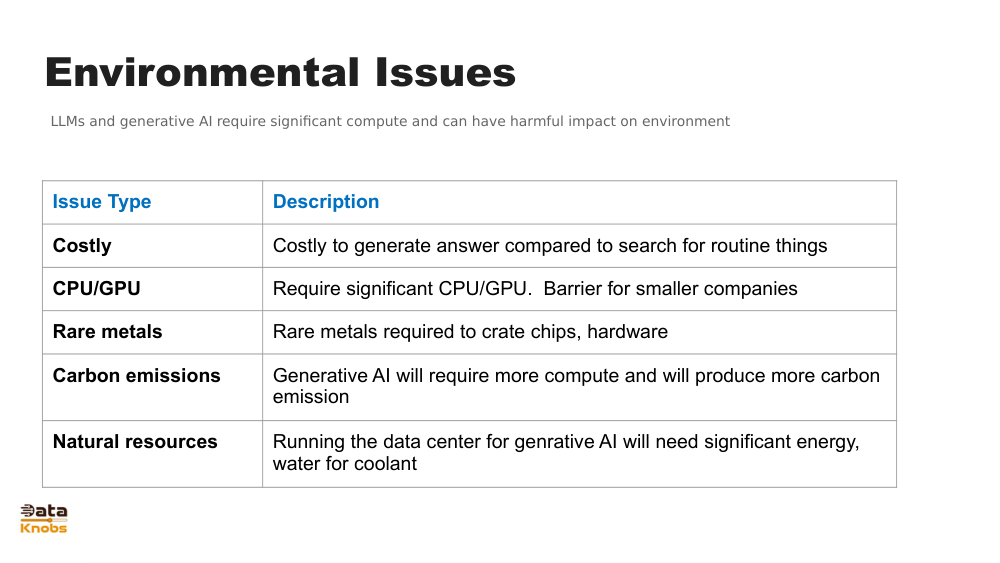
A clear explanation of the concept shown in Slide 23, including examples, applications, and technical details.
Slide 23 introduces the concept of embeddings and vector representations in Generative AI. Embeddings transform text, images, or other data into meaningful numerical representations that models can understand. This enables search, classification, similarity matching, and reasoning across semantic relationships.
Dense numerical vectors representing semantic meaning of text or images.
A multi-dimensional space where similar concepts cluster closely together.
Measuring closeness using cosine similarity or distance metrics.
Input text, image, or data is tokenized.
The model converts tokens into vector embeddings.
Vectors are stored or compared in a vector database.
Results ranked by similarity power retrieval and reasoning.
Users retrieve results by meaning rather than exact keywords.
LLMs retrieve relevant documents via embeddings to generate accurate answers.
Items with similar vector signatures produce improved suggestions.
Outliers are detected by distance deviations in vector space.
A dense numerical representation of meaning.
They enable semantic search and rich reasoning.
Yes, different models produce different vector spaces.
Learn how embeddings drive retrieval, reasoning, and smarter generative outputs.
Learn More