Generative AI Tutorial – Slide 39 Explained
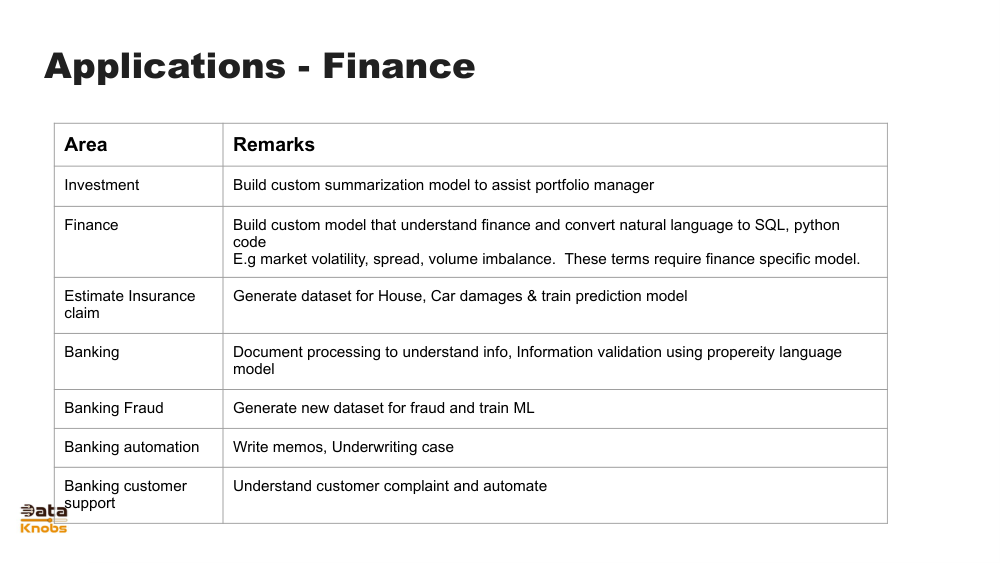
A clear explanation of the concept shown in Slide 39, including examples, applications, and a technical breakdown.
A clear explanation of the concept shown in Slide 39, including examples, applications, and a technical breakdown.
Slide 39 focuses on how modern generative AI systems use patterns from large datasets to generate new, statistically consistent outputs. The slide highlights the relationship between training data, model architecture, and output generation.
Models analyze huge datasets to detect statistical regularities across text, images, code, audio, and more.
Data is compressed into a multidimensional space capturing structure and meaning.
The model samples from the learned distributions to create novel but coherent content.
User provides prompts or example data.
Model converts input into latent vectors.
The system predicts the next most likely item in the output sequence.
Text, images, audio, or code are produced.
Chatbots, creative writing, summarization, translation.
Art creation, concept design, photo enhancement.
Boilerplate creation, debugging suggestions, automation.
Voice cloning, sound design, transcription.
It can produce new content at scale and adapt to complex tasks.
It recognizes patterns, not true semantic understanding, but often mimics it effectively.
Bias, hallucinations, and lack of real-world grounding.
Explore more slides and deepen your understanding of modern AI systems.
View More Tutorials