Generative AI – Slide 83 Deep Dive
Understanding the key concept illustrated in Slide 83 with clear examples, applications, and a technical breakdown.
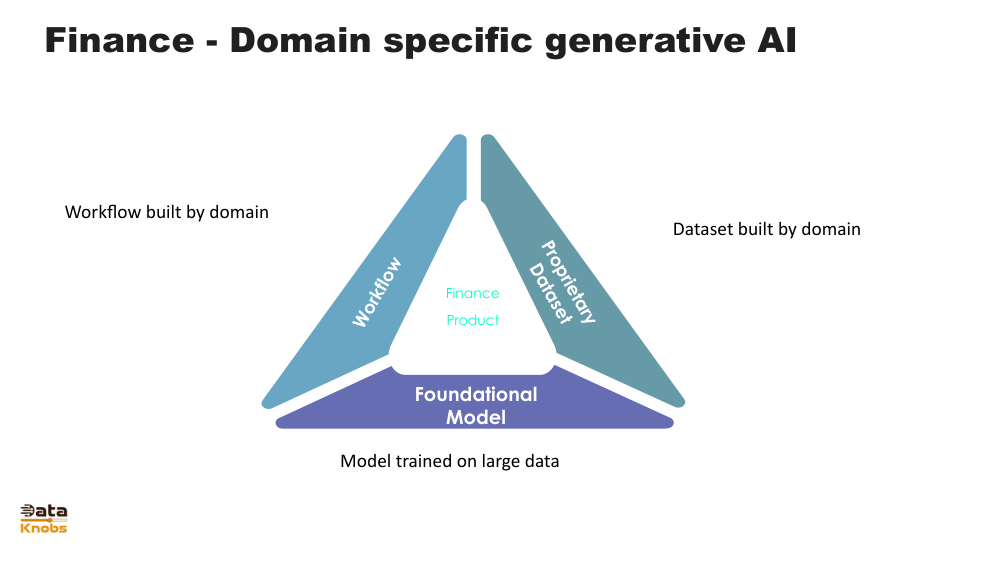
Understanding the key concept illustrated in Slide 83 with clear examples, applications, and a technical breakdown.
Slide 83 presents the idea of *model generalization and generation fidelity* in modern generative AI. It highlights how models learn patterns from training data and then produce outputs that preserve structure while creating entirely new content. The slide emphasizes the balance between learned patterns, randomness, and model control mechanisms (like prompts or conditioning signals).
The model extracts statistical structure from its dataset vocabulary, shapes, textures, or symbolic relationships depending on the modality.
Prompting, embeddings, or conditioning inputs guide the model to generate outputs aligned with user intent.
The model must generalize beyond examples rather than copying them, enabling fresh, context‑appropriate outputs.
User provides prompt, data, or control signals.
Model converts inputs into high-dimensional embeddings.
Model probabilistically generates new content based on learned patterns.
Latent space content is transformed into text, image, audio, or code.
Writing, image creation, concept design, music composition, and product ideation.
Document drafting, workflow agents, customer support summarization, and process optimization.
Code generation, debugging, architecture suggestions, and API integration workflows.
Data synthesis, simulation, hypothesis exploration, and model prototyping.
No. It learns statistical patterns and generates new combinations rather than reproducing exact samples.
Controlled randomness allows the model to produce novel and varied outputs instead of predictable ones.
Model architecture, prompt quality, training data, and sampling strategies like top‑k or temperature.
Continue exploring deeper concepts in the Generative AI learning path.
Next Lesson