Generative AI Tutorial – Slide 33
Explanation, examples, applications, and technical insights based on the concept shown in Slide 33.
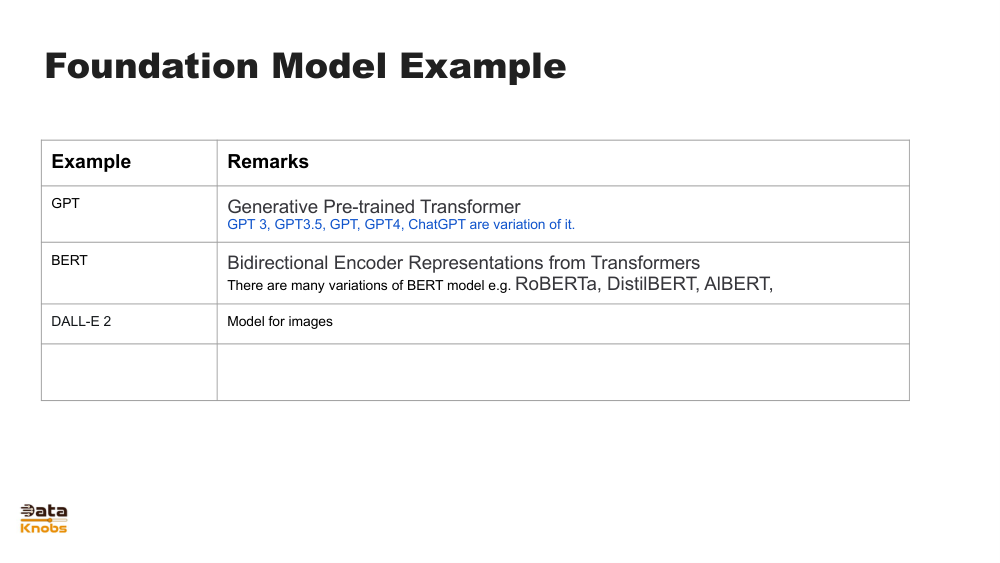
Explanation, examples, applications, and technical insights based on the concept shown in Slide 33.
Slide 33 focuses on how generative models transform input representations into meaningful outputs, emphasizing the mapping from the latent space to visible, coherent content. This concept is essential for understanding how AI creates text, images, and other media.
A compressed representation where the model organizes knowledge into patterns and relationships.
Transforms latent vectors into human-readable outputs like sentences or images.
Numerical representations capturing semantic meaning used for creating or analyzing content.
Model converts input text or prompts into embeddings.
Model interprets meaning in latent space.
Decoder produces structured content step-by-step.
Model adjusts output using probabilities and constraints.
Predicts labels or outcomes, follows defined rules, interprets existing data.
Creates new content, uses probabilistic output generation, learns representations.
It shows how models move from abstract internal representations to concrete outputs.
It lets models generalize, compress meaning, and generate varied outputs.
Transformers encode input into embeddings, operate in latent space, then decode into text.
Explore more generative AI concepts and tutorials.
Next Lesson