Generative AI Tutorial – Slide 88
A clear explanation of the concept shown in Slide 88, including examples, applications, and technical insights.
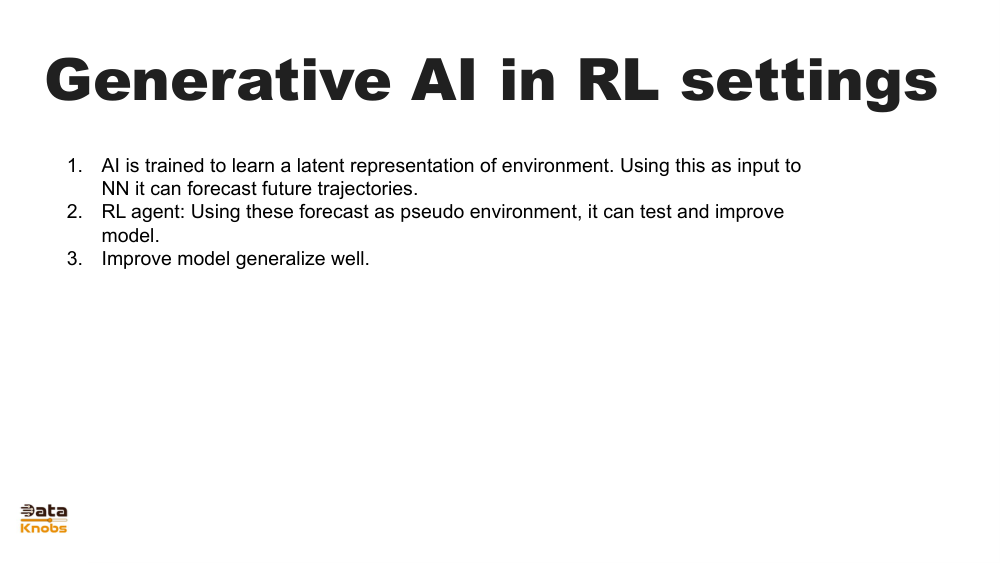
A clear explanation of the concept shown in Slide 88, including examples, applications, and technical insights.
Slide 88 focuses on how generative models transform inputs into structured outputs through learned patterns. It highlights the relationship between prompt, model architecture, and generated result.
Models use input prompts to generate coherent text, images, or data.
Generative AI identifies statistical structures within large datasets.
Outputs may be improved through multi-step reasoning or post‑processing.
User provides text or structured input.
Prompt is converted into vector representations.
Transformer layers predict next tokens or image features.
Model produces text, images, or structured results.
Write articles, emails, and creative stories.
Produce illustrations, concepts, and design assets.
Create synthetic training data or simulations.
Sampling randomness and temperature settings introduce creativity and variability.
It generates new outputs by combining learned patterns, not by copying stored text.
Training data scale, model size, architecture, and prompt specificity.
Deepen your understanding with more slides and hands‑on examples.
Learn More