Generative AI Tutorial – Slide 98
An explanation of the concept depicted on Slide 98 with examples, real-world applications, and a technical breakdown.
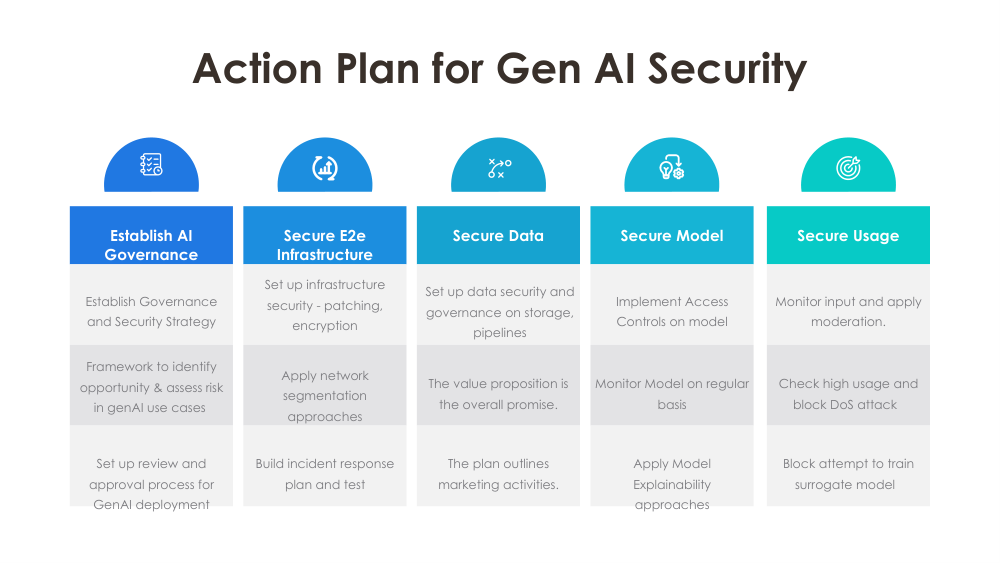
An explanation of the concept depicted on Slide 98 with examples, real-world applications, and a technical breakdown.
Slide 98 focuses on how generative AI models interpret prompts, transform them into internal representations, and produce context‑aligned outputs. This concept highlights the importance of prompt structure, model reasoning paths, and iterative refinement.
The model decomposes the prompt into tokens and identifies intent, constraints, and context.
Embeddings map the prompt into a high‑dimensional latent space where semantic meaning is represented.
The model selects tokens sequentially based on probability distributions shaped by training data.
Text, image, or multimodal request.
Converted into tokens for model processing.
Model predicts the next tokens using learned patterns.
The final text, image, or multimodal answer.
Blogs, scripts, marketing text, product descriptions.
Explaining concepts, analyzing datasets, summarizing documents.
Story writing, music generation, design brainstorming.
It depicts how prompts flow through a generative AI model, representing transformation from input to latent reasoning to output.
Clear prompts help guide model reasoning, reducing ambiguity and improving output quality.
Not in a human sense models recognize statistical relationships between concepts and use them to predict appropriate responses.
Explore more slides, deepen your understanding, and build real AI-powered applications.
View Next Slide