Generative AI Tutorial – Slide 82
Explanation, applications, and technical breakdown of the concept illustrated in Slide 82.
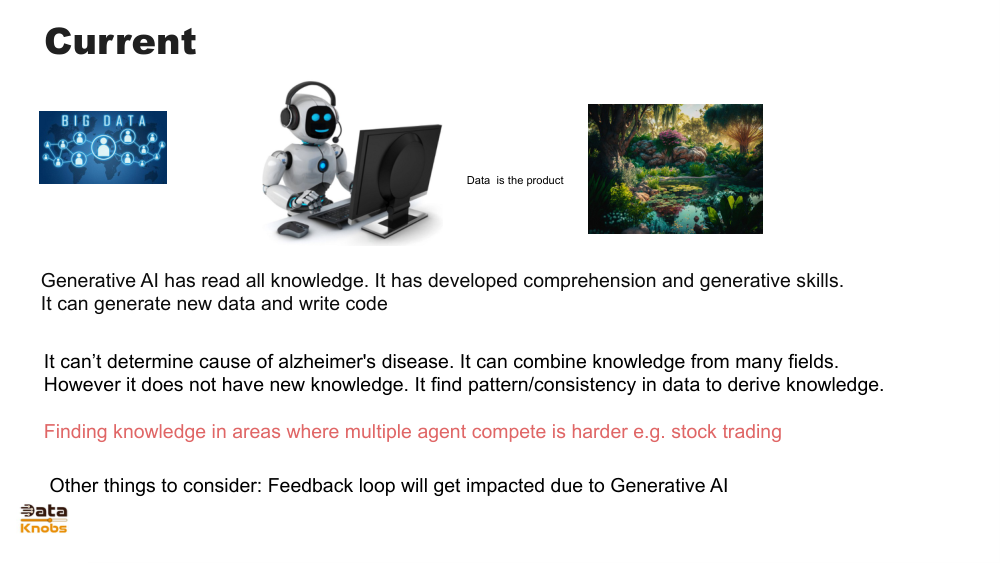
Explanation, applications, and technical breakdown of the concept illustrated in Slide 82.
Slide 82 highlights how generative AI models transform raw input into structured, intelligent output using layered representations. The concept focuses on how models interpret text or data, encode meaning, and produce coherent responses or generated content.
Input text is broken into tokens representing sub‑words or symbols.
Tokens become high‑dimensional vectors capturing meaning and context.
Models predict the next token repeatedly to generate complete output.
User provides text, prompt, or context.
Model converts tokens into embeddings.
Attention layers infer relationships and patterns.
Tokens are produced until the final output is complete.
Summaries, blogs, scripts, answers.
Prompt-to-image rendering, concept art.
Classification, sentiment, topic tagging.
It illustrates how generative models transform input into meaning-rich vector space representations and then generate new content.
They encode semantics, enabling models to understand meaning beyond surface-level text.
Chatbots, creative tools, search engines, summarizers, and multimodal AI systems.
Continue learning the foundations of modern AI models.
Next Slide